Posted by Jeff Salmeri on Wed, Feb 22, 2012 @ 09:22 AM
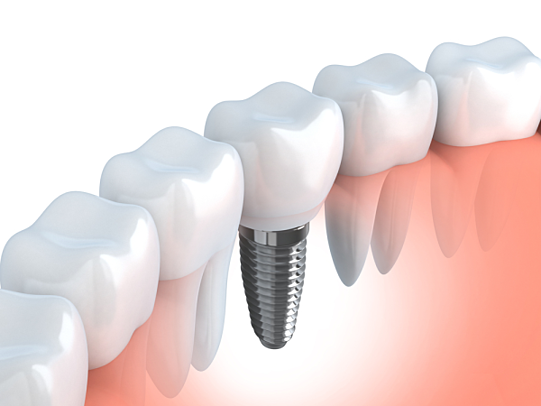
There are several specialties in dentistry. One of these specialties is implantology. Implant dentists replace people's broken, decayed, or missing teeth with permanent artificial ones. Not all dentists are qualified to do implants. They need to train in implantology as well as complete the regular dentistry course prior to becoming certified as an implant dentist. Only after these educational requirements are met may they perform various implant procedures, including the most common one, the titanium implant. In this procedure the implant is attached to a titanium screw embedded in the jawbone.
There are various reasons patients would want a permanent implant. It can be because they have lost a tooth due to an injury, which is common among athletes or people involved in accidents. It can be because some teeth have decayed and need to be removed. Or it may be for aesthetic purposes -- there might be a tooth gap that is not really causing inconvenience, but is diminishing the radiance of the patient's smile. Mini implants are also used to hold dentures in place. Whatever the reason, it's the implant dentist's job to figure out which method is best to use.
Beside permanent dental implants, there are a few other options available to patients
if they want to replace missing teeth or save ones that haven't completely gone to waste. Some of these options are dental bridges, dental crowns, dental veneers, and full mouth reconstruction. The difference between dental implants and all these other procedures is that dental implants are permanent. Once they are installed, the patient won’t have to worry about losing his or her teeth again.
The process of dental implantation is not that complicated, but it does require surgery. The first step is the pre-surgery stage, where the jaw bone is prepared for drilling. The second step is the actual surgery, where the drilling is done and a titanium screw is inserted into the hole. The healing cap is then attached to the screw, which keeps it in place permanently. The implant usually heals by integrating with the jawbone on its own and no special subsequent procedures will be necessary. However, it does take a while before it is fully healed. Sometimes, healing can take up to eight months. During this period, the patient has to visit the dentist regularly to check if the implant is healing properly. Once healed an abutment and crown is placed on the implant.
Dental implants are highly recommended because they are effective and safe if done by a competent professional. The only drawback is that the procedure can be rather expensive, sometimes costing up to $3,000 per tooth. Because they are classified under cosmetic dentistry, dental implants are not typically covered by insurance. However, patients can still save some money in the long run because implants are permanent solutions; patients only need to get them once in their lifetime. To further ensure they get high quality implants that will last forever, patients should choose a reputable implant dentist to do the job.
Posted by Jeff Salmeri on Wed, Nov 09, 2011 @ 07:21 AM
Each of your teeth are a tiny living organs that are as much a part of your body as your heart. So what can you do to bring health to these mini miracles?

Lets go back a few years to the 1930's and a major pioneer in dental science, Weston A. Price DDS fromCleveland,Ohio. Dr. Price did a long term study that took him all over the planet. He found that people who lived in ‘so called’ backward primitive conditions had excellent teeth and wonderful general health. They were eating local natural unrefined foods. That is all they had access too. Some had a thick coating of green slime covering their teeth (super gross!). But underneath the buildup were perfectly formed and healthy teeth. His study showed that diet was key to healthy gums and teeth. As soon as refined foods were imported or made available to these primitive eaters, physical degeneration digressed dramatically within 1 generation. No more perfect teeth.
In Apes, Men and Morons Harvard professor Earnest Hooten states "Let us go to the ignorant savage, consider his way of eating and be wise. Let us cease pretending that toothbrushes and toothpaste are anymore important than shoe brushes and shoe polish. It is store food that have given us store teeth."
In Sugar Blues by William Duffy a #1 best seller since the 1970's he states "Sugar eaters may brush their teeth between every bite and see their dentist 3 times a day, but their is not escaping the sugar blues." Research shows that a high sugar diet can be directly connected to high incidence of tooth decay. It is from the inside out. If it is in your blood stream , it is in your teeth. It's not only the soda passing over the teeth while you are drinking it, but the high sugar content you are putting into your body and therefore all the vital fluids coursing through your teeth and entire body system. Gum disease and tooth decay are due to the whole body being out of whack.
In Healthy Mouth Healthy Body by Victor Zeines DDS, he states a healthy body keeps the teeth healthy. Want to avoid dental treatment? The key is less sugar, bad fats and high sugar dairy and instead eating plenty of fresh organic fruits and vegetables!
Just one more reason to pump up the nutritious calories in your meals and snacks.
When you eat healthy the bacterial population are kept in balance. When your general health improves, the mouth chemistry benefits greatly. This equates to a great report from your dentist at your next exam. Periodontal disease and tooth decay are a symptoms of an underlying deficiency in your body.
References:
In Defense of Food by Michael Pollan
Sugar Blues by William Duffy
TheChinaStudy by T. Colin Campbell PhD and Thomas M. Campbell II, MD.
Healthy Mouth, Healthy Body by Dr. Victor Zeines www.NatDent.com
www.foodmatters.org
www.massdental.org
Posted by Jeff Salmeri on Fri, Oct 07, 2011 @ 09:02 AM
Maintaining good oral hygiene is important for everyone but even more so for people with diabetes. Because of their illness, diabetics are more prone to developing gum problems and other dental disorders. This is why they must practice proper oral hygiene at all times. Aside from the regular brushing and flossing that we all should do, a typical oral health care routine for diabetics includes the management of blood sugar levels, specialized dental care, and visits to the dentist at least every six months.
The risk for infection is much higher for diabetics, and this is the main reason oral problems such as periodontal disease and gingivitis can occur so much more easily. Once these conditions develop, they can be very hard to reverse and may leave the diabetic with no choice but to undergo surgery in order to correct the problem. If you have diabetes, you don't have to let it get this far. By brushing three times a day and flossing at least once daily, you can keep your mouth clean and healthy and you won't need specialized diabetes oral health treatments.
Diabetics are subject to the same risks as ordinary, healthy people when it comes to dental health. The only difference is that diabetics experience the problems much sooner because of their weaker resistance to infection. If you have diabetes and you neglect your dental hygiene, it is likely that your blood sugar imbalance will eventually result in gum disease, dry mouth, halitosis, and other oral problems caused by bacterial infection.
Aside from the routine brushing and flossing of the teeth, the following are some helpful tips you can use to maintain good oral health and avoid having to undergo special diabetes oral health procedures, which are not only inconvenient but costly as well.
1. See your dentist regularly. Once you've been diagnosed with diabetes, it's imperative that you increase your dental appointments to at least twice a year. This way, you'll be able to get all the dental care you need, including cleaning and whitening procedures, if necessary.
2. Have your gums checked regularly. This is essential so that any problems will be detected and treated while they're still in the early stages. Gum disease in diabetic patients can become very nasty when not identified and treated right away.
3. Check for telltale signs of dental problems. In between dental appointments, check for symptoms of dental problems so you can go to the dentist when you notice anything amiss. Some of the signs to look out for are bad breath, fungal infection or thrush, and dry mouth.
4. Monitor your blood sugar levels. A host of oral health issues for diabetics can be avoided simply by making sure that your blood sugar is always at a healthy level.
If you follow the tips mentioned above, you will be able to enjoy excellent oral health despite your diabetes.
Posted by Jeff Salmeri on Thu, Sep 15, 2011 @ 09:21 AM
You brush, floss, rinse and see your dentist twice a year or more. You have a couple of cavities each year, maybe a crown, post or root canal. You would be totally willing to do more at home for your oral health if it would cut down on those dental visits, right?
Well, I have secrets for you, that will do just that. It's free and will have you excited to get your next report card from your dentist or hygienist.
Did you know that your teeth and your body are not 2 separate entities? Teeth are part of the body, they are not inactive organs. Teeth are not just dead bone embedded in your jaw bone. They are held in your mouth by the surrounding periodontal tissue. They are vital living extensions of your whole self. Teeth are subject to the same metabolic processes that affect other organs of your body. That's why dentists and doctors can tell much about your health from your teeth, tongue, eyes, fingernails, hair, skin etc. Everything on the outside of us is a product of our inside health. And while it is much easier to remove a sick tooth then a sick heart, it is crucial to keep ALL out organs healthy.
Resistance to tooth decay involves the health of the entire body. Teeth are individual little miracles that are alive and they are hungry for nutrition! Each tooth has 1.5 million microscopic tubules that are always circulating fluids full of nutrients, chemicals and hormones. This vital fluid circulates from the pulp out to the enamel and saliva. The pulp inside of each of your teeth works hard to supply nutrients to the dentin and keep the teeth healthy and alive. The fluid inside your teeth determines the health of your teeth and gums. The health of these fluids is determined by the health of your body. The complex physiological processes in our mouths are amazing. Teeth with a sluggish internal activity have higher incidence of decay.
There are multiple connections between oral health and total wellness. Protect your health protect your teeth and gums. Keep your teeth and gums healthy, help protect your whole self. They go together. When you control inflammation in your body, it will help your hygienist and dentist control gum inflammation. When inflammation is controlled in your mouth, you have a much less chance of heart disease, diabetes and cancer. It's just a fact. So what are the secrets to healthy thriving happy teeth? See part 2 of Your Teeth are Alive and Hungry!
References
In Defense of Food by Michael Pollan
Sugar Blues by William Duffy
TheChinaStudy by T. Colin Campbell PhD and Thomas M. Campbell II, MD.
Healthy Mouth, Healthy Body by Dr. Victor Zeines www.NatDent.com
www.massdental.org
www.foodmatters.org
Posted by Jeff Salmeri on Tue, Sep 13, 2011 @ 08:36 AM
According to the National Institutes of Health, 80% of adults in the United States are affected by some form of periodontal disease. Most people don't even realize they have this problem, dismissing it as ordinary gingivitis.
What Causes Periodontal Disease?
The most common cause of periodontal disease is the buildup of dental plaque due to oral bacteria. As the plaque accumulates on the surface of the teeth, as well as in the crevices in between the teeth, toxins are released in the mouth, causing irritation and infection in the gums.
What are the Signs of Periodontal Disease?
Typical signs of periodontal disease include swollen and bleeding gums, bad breath that won’t go away even after using mouthwash, and loose or sensitive teeth. Sometimes, you may also experience pain while chewing your food or while brushing your teeth. In the early stages of the disease, you might notice blood in your spit after brushing your teeth. Since there is still no pain at this point, most people ignore this and do not consult with their dentists. Unfortunately, this is already a sign that there is a problem. Set up an appointment with the dentist as soon as possible.
What are the Treatment Options?
Before any treatment can be given, your dentist will check to see whether you do have periodontal disease or not. Your dentist will examine your gums for the presence of periodontal pockets and he or she may even order an X-ray to check for bone loss. Mild to moderate cases can be treated by a regular dentist but if your case is quite advanced, you may have to see a periodontist for proper treatment.
Generally, the treatment procedure begins with intensive cleaning, which includes scaling and root planing. You may have to go through this procedure once or up to four times; it depends on how severe your condition is. Your dentist will then teach you a special oral care routine to do at home for the following two weeks so that your gums can heal properly.
Again depending on how the treatment has progressed, you may have to undergo more procedures like laser treatments to eradicate the remaining bacteria and to remove the damaged gum tissues. For the more advanced cases of periodontal disease, more intensive treatment may be required, such as surgery, bone grafting, and tissue grafting.
How Can Periodontal Disease Be Prevented?
The best method for preventing periodontal disease is to practice proper oral hygiene. Brush your teeth after every meal, or at least twice a day. Make sure to floss once every day. Use an alcohol-free mouthwash after brushing. Regular professional cleaning by your dentist is also helpful, as this removes the plaque and tartar that even brushing and flossing cannot eliminate. Stick to a healthy diet; this is helpful for keeping your teeth and gums in healthy condition. Eat plenty of fresh fruits and vegetables and stay away from the sweets and processed foods. Drink at least eight glasses of water a day. This is good for rinsing the mouth and keeping it free of harmful oral bacteria.
Posted by Jeff Salmeri on Tue, Sep 13, 2011 @ 08:36 AM
Having missing teeth can make ordinary activities such as eating and talking difficult. People often feel self-conscious if the gap is quite visible. This is why most people get dentures, partials or bridges to replace the missing teeth. These are all decent tooth replacement options but there are times when dentures, partials and bridges can be an inconvenience. For example, they can stick to certain types of food and they may even fall off in the middle of a meal. They can also be quite tedious to clean. If you have the budget for it, a better alternative to dentures are dental implants.
What is Dental Implant Surgery?
Dental implant surgery is a procedure that replaces a person’s missing teeth with dentures or permanent crowns. Only dentists who have had the proper training are qualified to perform this type of surgery. Dental implant surgery is often classified as a type of cosmetic dentistry.
What are the Types of Dental Implants?
There are several types of dental implants: root form implants, plate form implants, and subperiosteal implants. They vary in terms of the material and the procedure used to affix the implant. Of the three dental implant types, root form implants are the most common procedure. In this procedure, the dental surgeon implants a titanium screw into the jawbone, onto which the permanent replacement tooth is attached. In cases where the jawbone is not strong enough to hold a titanium screw, a plate is placed over the bone and this is where the false tooth is implanted.
How Do You Know If a Dentist is Qualified to Perform Dental Implant Surgery?
Not all dentists are certified to perform dental implant surgery, only those who have received proper training from a reputable institution. You can easily find out if a dentist is qualified by asking about his or her implant experience and background. Even if the dentist has all the credentials to show, make sure you look at before and after photos of his or her dental work so you can see for yourself just how good the dentist is at his or her job.
How Much Does a Dental Implant Cost?
It’s hard to tell exactly how much a dental implant costs because it depends on several factors. Generally, the procedure is an expensive one. Most dental surgeons charge between $1,500 and $3,000 for every tooth. Some people have been known to pay as much as $50,000 for a set of permanent dental implants.
Are There Special Procedures That Must Be Done to Care for Dental Implants?
The actual dental implant procedure doesn’t take very long. It can usually be done in an hour or two, but there are many subsequent procedures that must be done to ensure the false teeth have been properly installed. All in all, it can take up to 8 months until the procedure is really done. During this period, you should take care of your teeth by following the instructions given by your dentist. Proper dental hygiene is important once you have dental implants because the slightest neglect can lead to infection and other serious dental problems.
What are mini implants?
Mini implants are placed the same way as regular implants and are used to hold dentures in place. Dentures are typically held in place by suction. Mini implants are placed in the denture and the jaw allowing the denture to be snapped into place. With this system much of the denture that normally covers the pallet can be cut away. Having a horseshoe shaped snap in denture is much more comfortable and secure.
Posted by Jeff Salmeri on Mon, Aug 22, 2011 @ 11:22 AM
Online PR News – 17-August-2011 –With a 5-star rating for providing outstanding customer service, Dynamic Dental has earned the prestigious CMUS Talk of the Town Customer Satisfaction Award in the Dentists category.
The award, presented by Talk of the Town News, Customer Care News magazine and Celebration Media, honors companies and professionals that provide excellent customer service as reported by their customers through no-cost, user-review websites, blogs, social networks, business rating services, and other honors and accolades. This data is analyzed by a team of researchers and converted into a star rating; only those that receive a 4-star to 5-star rating receive the Talk of the Town Customer Satisfaction Award.
Established in 2008, Dynamic Dental is a general, family and multispecialty dental practice servicing Mansfield, Foxboro, Easton, Attleboro, Norton, Plainville and many other communities. Founding doctor Edita Outericka, DMD, saw a need for a multispecialty practice in the area. “Having multiple general dentists as well as several specialists in one location affords the patient the opportunity to not have to be referred out to other offices,” says Outericka. The practice’s dental director, Outericka has been practicing cosmetic and family dental care since 2000. The practice also includes Dr. Alyson Barnes, Dr. Andrea Bricker-Sullivan, Dr. Paul M. Kaplan and Dr. Abbas Ghorieshi.
““When visiting Dynamic Dental be prepared for a far different and better experience than you have ever had at a dental office. Dynamic Dental is focused solely on the needs of the patient.””
With a focus on patients’ physical and mental needs, Dynamic Dental specializes in beautifying smiles, maintaining patients’ overall dental health and helping them improve their appearance. “Dynamic Dental is just that — dynamic,” says Outericka. The office uses the latest technology and systems, and is completely paperless.
In addition, the staff is knowledgeable and friendly. “Our staff knows our patients by name, and they are greeted that way,” says Outericka. As evidenced by its high customer satisfaction rating, Dynamic Dental places a high priority on serving patients. “When visiting Dynamic Dental be prepared for a far different and better experience than you have ever had at a dental office. Dynamic Dental is focused solely on the needs of the patient.”
“Dynamic Dental was started to bring a new approach to dental care to our patients, and it’s working,” says Outericka. “Our system is unique, fresh and appreciated by everyone who has had the opportunity to experience Dynamic Dental.
Dynamic Dental is located at 200 Chauncy Street, Suite #210. For more information about services and care, contact them at 508-261-9261 or go online to www.dynamicdentalinc.com.
Posted by Jeff Salmeri on Wed, Jul 13, 2011 @ 07:41 AM
Who wants to spend more time in the dental chair than they have to? That’s why preventive dental care is so important. If you don’t care for your teeth and gums now, you could pay for it later with costly restoration work. You already know the importance of brushing and flossing twice a day, and you can do it the manually by using a manual toothbrush or tap into the power of an electric toothbrush. Are there benefits to using an electric toothbrush over a manual one?

Benefits of Using an Electric Toothbrush
According to research published in the Journal of the American Dental Association, electric toothbrushes outperform manual brushes. In this study, over 80% of the patients who switched to an electric toothbrush had better oral hygiene after making the switch. Not surprisingly, more dentists are recommending electric toothbrushes to their patients these days.
This doesn’t mean that you can’t do a decent job cleaning your teeth and gums with a manual toothbrush. Using an electric toothbrush offers an advantage when it comes to removing plaque and reducing the risk of gum disease, and it’s better able to remove plaque from those harder to reach areas.
There’s the added benefit that some people are more compliant when they use an electric toothbrush, because they don’t have to work as hard. Electric toothbrushes are also timed to clean for a full two minutes. How many people actually brush their teeth that long with a manual toothbrush?
With a manual toothbrush, some people get overly aggressive and scrub their teeth and gums with too much force. This type of pressure over time can lead to gum recession and tooth sensitivity. This usually isn’t a problem with an electric toothbrush since you need minimal pressure to get the job done.
Electric toothbrushes also work well for people who have limited use of their hands due to arthritis since less manual motion of the toothbrush is required. With an electric toothbrush, you simply move the brush from tooth to tooth. Older people also may have more success using an electric toothbrush.
Are There Disadvantages to Using an Electric Toothbrush?
The biggest disadvantage is price. Electric toothbrushes can cost anywhere from $35.00 to $100.00 or more. Not everyone can afford that kind of price tag, but when you consider the cost of restorative dental work, it’s a good investment.
The bottom line?
Using an electric toothbrush has the advantage of removing plaque more effectively, which could reduce your risk of gum disease. You can still do a thorough cleaning with a manual toothbrush, but it takes a little more elbow work. There’s also the risk of damaging the gums by being too aggressive with the brush.
If you’re a person who’s lazy about brushing your teeth and rarely brush for a full two minutes, an electric toothbrush will time the brushing for you and you won’t have to work as hard. Whichever you choose, keep brushing, flossing – and see your dentist regularly.
References:
J. Am. Dent. Assoc. Vol. 131, N.3. 389-394.
Posted by Jeff Salmeri on Wed, May 18, 2011 @ 03:00 PM
The most feared form of dental surgery is the notorious "root canal". Despite being so widely feared, many people, even those who have had one performed, have no idea what is involved. This leads to people who need to have one being terrified prior to surgery, mostly because they expect the worst. Here is a description of the modern root canal procedure.
The term "root canal" is a common term for a dental procedure to treat rotting teeth. The procedure has a more formal title: endodontic therapy. Root canals are used to treat teeth with infected pulp. The pulp of a tooth is the tissue consisting of nerve endings
and blood vessels which is inside the pulp-chamber of the tooth. The pulp can become infected and inflamed due to cavities or cracked teeth.
Step 1
During a root canal, the dentist first drills into the hollow part of the tooth (pulp-chamber) and removes the infected tissue. This is called a "pulpectomy".
Step 2
The dentist will then remove the nerve from the root canal. This is done by drilling it out.
Step 3
After removing the nerve the dentist cleans the chamber, by irrigating it, and filing it out. Then it is filled with a special “plastic” which seals the roots. The doctor will also create room for a titanium post if needed. You should not wait long after a rot canal to have your permanent crown placed. The tooth is in a weakened state and needs the protection of the crown. If you wait too long the tooth could crack and have to be extracted.
Root Canals are thought to be agonizingly painful but the procedure itself should be painless if performed properly. The dentist will use a local anesthetic which will be enough to control pain in most cases. In other, less-common cases there may be other problems, like abscesses, which hinder the application of the anesthetic. This can usually be prevented if a series of antibiotics is taken prior to the treatment. Some patients have the most discomfort after the root canal (usually the first 24 hours) as the body destroys the remaining infection that was “stirred up” by the root canal.
Posted by Jeff Salmeri on Wed, May 11, 2011 @ 07:52 AM
My Christmas list is almost done, I just have to decide if I want Santa to bring me the Nook or the Kindle. You see there is a Santa Clause who is there for you three times a year. Once during Christmas of course, and then two other times per year. When?
Every six months for your free dental cleanings and checkups. That means in order to take advantage of my cleanings and checkups you have to schedule the first one before June. That way you can get your second six month cleaning in December.
Use it or lose it! At the end of the year, those two free cleanings are gone, kaput, poof!
There is nothing worse then having a gift card expire and losing that $25 or $50 bucks. But that's what many people do year after year by forgetting to schedule regular dental checkups and cleanings.
Most dental offices are scheduled out a few weeks at least, so now is the time to call. A great dental cleaning does wonders for your oral heart health, not to mention your unique smile. Getting a dental cleaning rids your teeth of plaque and bacteria and thwarts gum disease leaving your pearly whites smooth and disease free. Plus, you'll get a goody bag with a new toothbrush and floss!

If your dentist finds you need some dental work, now is the time to schedule it.
Waiting could increase the risk of infection and cause more damage. You could also lose valuable yearly benefits. It is typical that your dentist's schedule will fill up quicker later in the year as all of the other people who put off the work they needed rush to get in and make use of their benefits before they expire.
So maximize your holiday shopping budget by starting your shopping early (don't forget yourself) and make use of your dental benefits by scheduling your first checkup of the year today.